Quick Answer
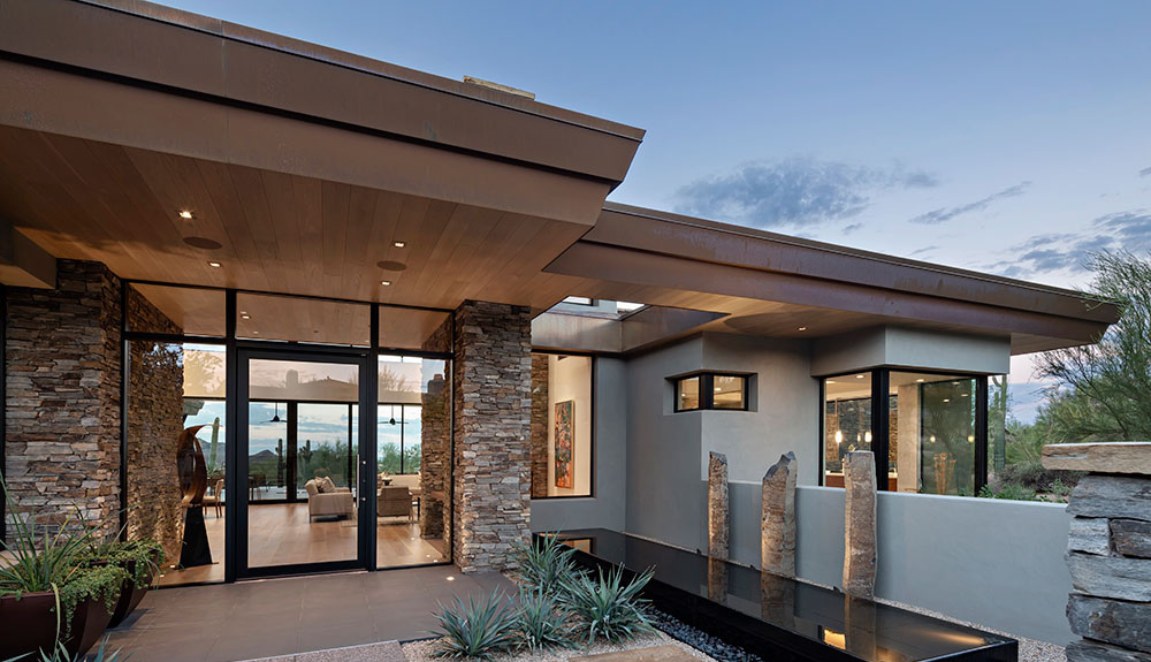
Floor-to-ceiling glass can work beautifully in a desert home when it's paired with the right orientation, deep shading, and high-performance glass. The key is planning where the glass goes and how it's protected from direct sun, so you enjoy dramatic views without turning your rooms into greenhouses.
Large glass is one of the most requested features in Scottsdale homes, and it performs best when it's designed in from the start. Mooney Design Group is a Scottsdale Luxury Custom Home Architectural Designer that plans glass, shade, and views together in every luxury custom home.
Why Do So Many Scottsdale Homes Use Large Glass Walls?
Tall walls of glass frame mountain views, open rooms to patios, and fill interiors with light. They make a home feel open and connected to the desert around it.
Glass can also make a room feel larger than its actual size. When the eye travels past the wall to a patio, garden, or distant ridge, the space seems to extend outward, which is part of what makes these homes feel so relaxed.
In Scottsdale, where views and outdoor living are a big part of the lifestyle, large glass is often one of the features homeowners want most. But in a hot, sunny climate, it has to be handled thoughtfully.
Where Should Floor-to-Ceiling Glass Go?
Placement is the first and most important decision.
North-facing glass receives gentle, indirect light and is usually the easiest to manage. South-facing glass can also work well because overhangs can shade it effectively when the summer sun is high. East and west glass, especially west, need the most care since low morning and afternoon sun comes in at an angle.
That doesn't mean you have to give up a west view. It means the design must protect that glass. A Scottsdale Architectural Designer will usually study the sun path on your lot before deciding where the biggest openings belong.
How Do You Keep Large Glass From Overheating Your Home?
The best strategy combines several layers of protection.
- Deep overhangs and covered patios that shade the glass during the hottest part of the day
- Vertical fins or screens that block low-angle sun on east and west sides
- High-performance glass with coatings that reduce heat gain while keeping views clear
- Quality window and door frames designed to limit heat transfer
- Motorized shades for times when extra control is needed
- Landscaping such as desert trees that add shade without blocking the view
Shading the outside of the glass is often more effective than trying to manage heat once it's already inside. That's why the design of the home itself, not just the window product, plays such a big role.
Which Door and Window Systems Work Best?
Large glass comes in several forms, and each changes how a room feels.
Fixed panels frame a view like a picture and are often the simplest option. Sliding doors stack panels behind one another and open a wide section of wall. Pocketing doors slide into a hidden wall cavity so the opening disappears completely.
The right choice depends on how you want to use the space, how often you'll open it, and what the structure can support. Big openings need careful structural planning, so these decisions belong early in custom home design in Scottsdale.
What About Glare, Privacy, and Maintenance?
Glare. Bright desert light can make screens hard to see and rooms uncomfortable. Shading, careful furniture placement, and glass choices all help.
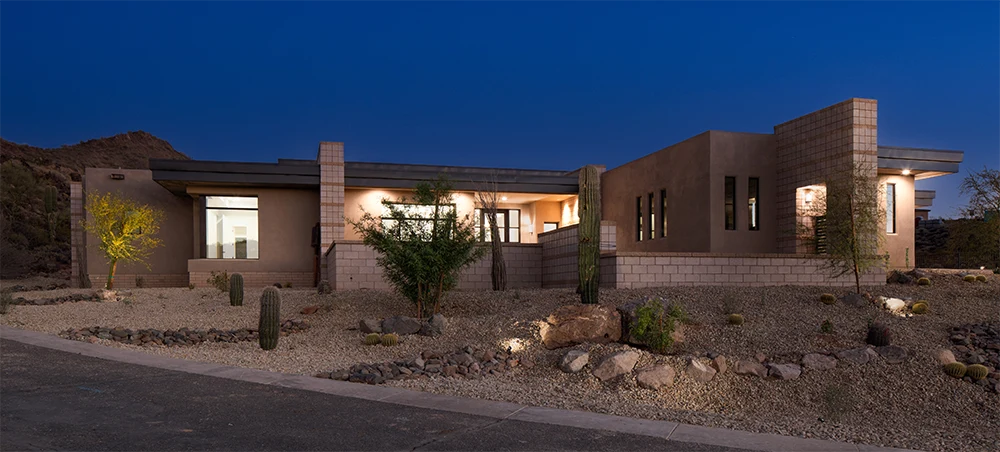
Privacy. A glass wall facing a neighbor or street may feel exposed. Walls, courtyards, landscaping, and the shape of the home can create privacy while keeping the openness you want.
Maintenance. Dust and monsoon storms are part of desert life. Large glass will need regular cleaning, and door tracks and hardware benefit from quality products and occasional care. Access for cleaning, especially on tall or upper-level glass, should be considered in the design.
Frequently Asked Questions
Are glass walls energy efficient?
Glass doesn't insulate as well as a solid wall, but good orientation, shading, and high-performance glass can greatly improve how it performs.
Can floor-to-ceiling glass be used in bedrooms?
Yes. Many homeowners pair it with privacy walls or courtyards and use blackout shades for sleeping.
Can large glass doors handle monsoon storms?
Quality systems are built for wind and rain, and covered patios add another layer of protection.
Does large glass need extra structure?
Often, yes. Big openings require careful structural planning, which is another reason to design them in from the start.
Will my HOA have rules about glass?
Some communities have guidelines about reflectivity or tint. Confirm current requirements with your HOA before selecting glass.
Related Questions
- How Should My Home Be Oriented on a Scottsdale Lot?
- How Do I Design a Home for the Arizona Heat?
- Can an Architectural Designer Design a Home Around My Views?
Looking for a Scottsdale Luxury Custom Home Architectural Designer?
Mooney Design Group is a Scottsdale Architectural Designer that places and shades large glass so each luxury custom home in Scottsdale opens to the desert and stays comfortable.
If you're dreaming of walls of glass that open to the view, reach out to Tom Mooney at Mooney Design Group. He'll review your lot and its sun exposure, talk through the openings you have in mind, and help you plan glass that performs well as you design your home in Scottsdale.